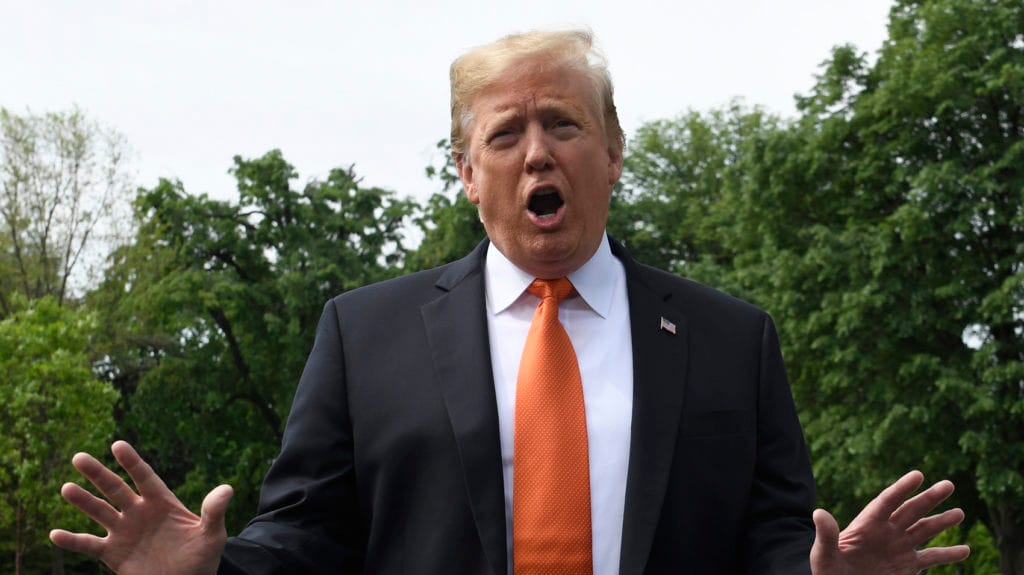
Former US President Donald Trump struck a softer tone toward Beijing on Sunday, saying the United States “wants to help China, not hurt it,” just days after threatening to double tariffs on Chinese goods starting November 1.
Trump’s conciliatory remarks came after his Friday statement warning of an additional 100% tariff on Chinese imports, citing what he described as China’s “extraordinarily aggressive” new export curbs targeting the rare-earths industry — a critical sector for global manufacturing and clean energy technologies.
“The USA wants to help China, not hurt it!!!” Trump wrote on Truth Social, adding that “respected President Xi (Jinping)… doesn’t want Depression for his country.”
💥 Tariff Threats Jolt Markets
Trump’s tariff announcement last week sent Wall Street stocks tumbling, with traders fearing the rekindling of a US–China trade war that previously rattled global markets during his first term.
He also hinted he could cancel a planned meeting with Chinese President Xi Jinping later this month, intensifying geopolitical uncertainty.
Currently, Chinese goods face a 30% US tariff, while Beijing maintains a 10% retaliatory levy on American imports.
⚙️ China Responds: ‘Double Standards’
Beijing swiftly condemned Trump’s remarks, with China’s Ministry of Commerce accusing Washington of “typical double standards” and “economic coercion.”
The ministry said the US had ratcheted up economic measures against China since September, arguing that “threatening high tariffs at every turn is not the right approach to engaging with China.”
🔋 Rare Earths: The New Flashpoint
Rare earth elements have reemerged as a major fault line in US–China trade relations.
These minerals — essential for manufacturing smartphones, electric vehicles, renewable energy systems, and defense hardware — are produced and processed almost entirely in China, giving Beijing leverage over global supply chains.
Trump’s criticism of China’s export restrictions underscores Washington’s growing concern over strategic resource dependencies, particularly as global demand for EVs and advanced technology accelerates.
💡 Outlook
Analysts say Trump’s shifting tone — balancing threats of tariffs with conciliatory messaging — reflects both electoral strategy and market sensitivity, as renewed trade tensions could pressure inflation and unsettle investors.
The Biden administration has yet to comment on Trump’s statements, though officials in Washington have previously warned against overreliance on Chinese rare-earth supply chains.