In a major boost to bilateral defence and economic cooperation, India and the United Kingdom signed a $468 million (£350 million) defence contract for the supply of UK-manufactured lightweight missiles to the Indian Army.
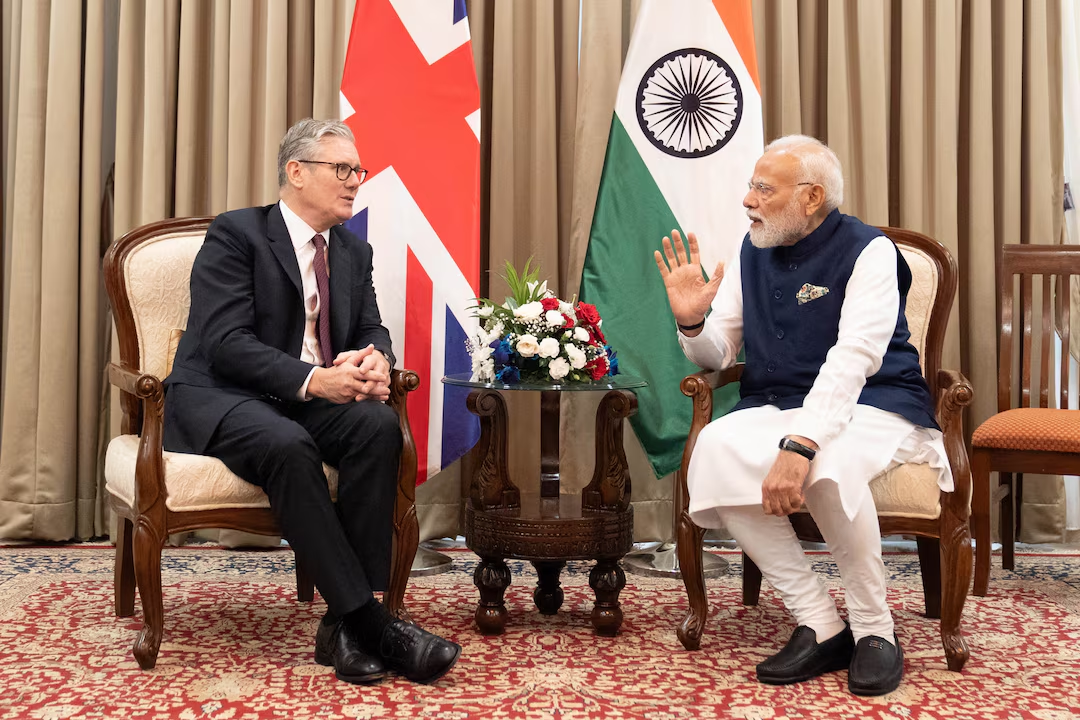
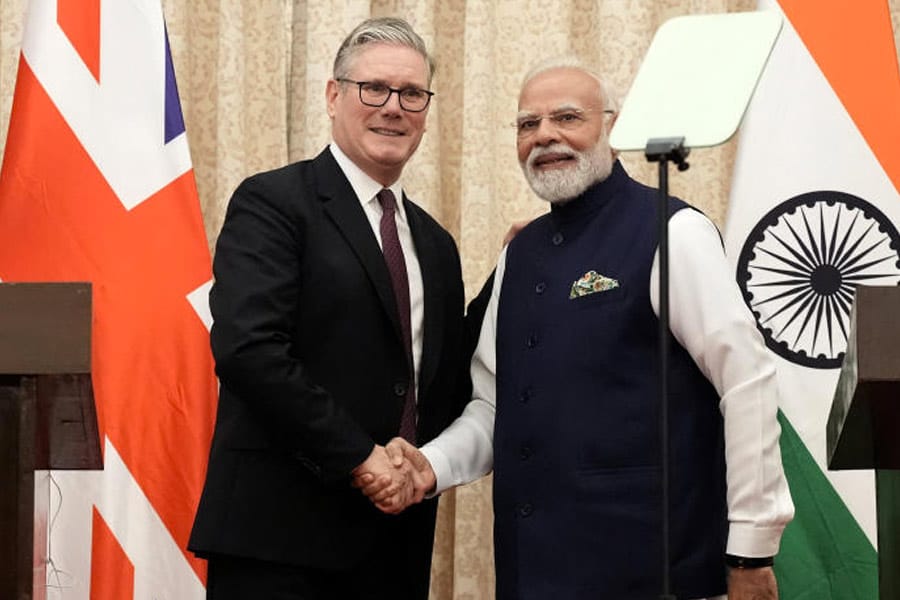
The landmark deal was announced during U.K. Prime Minister Keir Starmer’s first official visit to India since assuming office, underscoring both nations’ growing partnership in defence, technology, and trade.
💥 $468 Million Missile Deal to Deepen Defence Partnership
Under the new agreement, Britain will supply state-of-the-art lightweight missiles to India, further strengthening the nation’s short- and medium-range defence capabilities.
“This deal reflects a new era of defence and industrial collaboration between India and the U.K., aligning with the ‘Make in India’ and ‘Defence Export’ strategies,”
said an official from India’s Ministry of Defence.
The contract — valued at approximately ₹3,900 crore — is expected to facilitate joint production, technology sharing, and potential co-development of advanced defence systems in the coming years.
🏛️ Comprehensive Economic Trade Agreement (CETA) Progress
During high-level talks in New Delhi, Prime Minister Narendra Modi and Prime Minister Keir Starmer also reviewed the progress of the Comprehensive Economic Trade Agreement (CETA), which was initially signed in July 2025.
Both leaders reaffirmed their commitment to expanding the India–U.K. Free Trade Framework, focusing on key sectors such as:
- Defence manufacturing and joint R&D
- Renewable energy and climate technology
- Digital innovation and data partnerships
- Higher education, film, and cultural cooperation
“India and the U.K. share a dynamic trade relationship worth over $20 billion. We are building an alliance that combines innovation, skills, and trust,”
said PM Starmer in Mumbai.
🎬 BFI–NFDC Film Collaboration Signed in Mumbai
The visit also saw the signing of a landmark film cooperation pact between the British Film Institute (BFI) and India’s National Film Development Corporation (NFDC).
The Memorandum of Understanding (MoU), signed in the presence of BFI Governors Monica Chadha and Andrew Smith, is expected to:
- Boost India–U.K. co-productions
- Facilitate joint film projects and training programs
- Strengthen cultural exchange and talent partnerships
“Cinema has always connected our two nations, and this collaboration opens new doors for creative synergy,”
said BFI representatives during the event in Mumbai.
🧭 Starmer’s Delegation: 100-Member Business & Education Team
Prime Minister Starmer’s two-day India visit included a 100-member delegation comprising:
- Leading British entrepreneurs and investors
- Representatives from universities and research institutions
- Officials from cultural and film bodies
The delegation explored opportunities under the CETA to expand trade in renewable energy, education, AI, pharmaceuticals, and defence production.
The U.K. PM met with top Indian industry leaders, including representatives from Tata Group, Mahindra Defence Systems, and Reliance Industries, to discuss joint ventures and technology partnerships.
🔑 Key Takeaways from Keir Starmer’s India Visit
| Focus Area | Highlights |
|---|---|
| Defence Deal | £350 million ($468M) missile supply contract with Indian Army |
| Trade & CETA | Review of ongoing India–U.K. economic and trade framework |
| Film Industry Pact | MoU signed between NFDC (India) & BFI (U.K.) to enhance co-productions |
| Delegation | 100-member team including business, education, and culture leaders |
| Strategic Focus | Defence, green energy, digital innovation, and education cooperation |
🌍 Strengthening India–U.K. Relations
The visit marks a significant diplomatic step in reinvigorating the India–U.K. partnership, which is based on shared democratic values and strategic interests.
“We are working together for a safer, greener, and more prosperous world,”
said Starmer, calling India a “critical partner in the global economic future.”
Analysts believe this visit could accelerate the long-pending India–U.K. Free Trade Agreement, while also expanding defence collaboration beyond imports to include joint production and exports.